
Writing a Memoir: What I've learned so far...
I hesitate to tell too many people that I am writing a memoir, because in a way I have been telling people that since I was 11. I have been perpetually scrambling for loose paper in the middle of the night to write down my next brilliant idea. There was no organization for this dream of mine, until now…
“None of us can ever know the value of our lives, or how our separate and silent scribbling may add to the amenity of the world, if only by how radically it changes us, one and by one.”
― Mary Karr, The Art of Memoir

I hesitate to advertise to the world that I am writing a memoir, because in a way I have been telling people since I was 11. It feels like I’ve been perpetually scrambling for loose paper in the middle of the night to write down chapter ideas and my list of book titles outweighs any to-do list I’ve ever written. Between iPhone notes, lost cocktail napkins, and the 100 journals that litter my bedroom floor there is no organization to the process of this dream of mine.
Last spring, I was rounding out a fourth year at a job I loved. Somewhere deep inside I knew that I was too comfortable again. I was executing photoshoots like clockwork as if I were on cruise control, and my imagination was on pause. I decided to save up money to give myself a writer’s retreat of my own. I left my comfy job and Ian and I rented a cabin near Mt. Hood in Oregon. I had nothing on my agenda for the next two months but a blank canvas, some pens, and a charged laptop.
Within two weeks of moving to Oregon, Ian and I found out we were expecting our first baby. Very quickly, reality slapped the romantic ideas of whiskey glasses and typewriters out of my head. Instead I had two months of morning sickness and a brand new kind of deadline. I couldn’t diddle the days away in a forest talking to deer. If I wanted to make use of my time both in Oregon and before I became a mother, I needed some structure.
The tools that I used in the weeks to come were crucial to getting down a basic timeline of the book I wanted to write. Whiskey I discovered, was not even necessary, and today I have a solid outline for the beginning of what I hope to be a manuscript in the coming years.
Tool 1) The Internet // Research Phase

A couple chapters take place at the apartment where I lived in Toronto between 2010 - 2013. Luckily I have a ton of photos from those years that I can study. Certain furniture, pieces of art and even the clothes we wore, helped trigger memories I may have otherwise forgotten about.
The internet. Duh right? Well guess what you’re researching if you’re writing a memoir? Yourself. And no, I don’t expect a Wikipedia page to unfurl for most of us. This is more about cementing dates and getting your timeline correct. Have you ever found yourself on a roll with writing and then you suddenly freeze because you forget how old you are exactly? Or what important things happened that year? I wrote every year of my life in a grid with my age, grade, what I studied in school, and filled in little notes that seemed to feel important: Teachers, where we lived, what books and movies I loved. Anytime I reach a block on what year a certain memory was, I pull out this grid to help me place the moment in time.
Other than just looking at dates in history, your photos, whether on social media or not, can also be incredible windows into your past. We take so many and forget about them. I started organizing images by placing them in the same grid.
Don’t forget: Keep a scratch pad handy to catch any surprise flows when you’re looking at dates or photos. They’re almost guaranteed to evoke some words.
Tool 2) Book // Bird by Bird by Anne Lamott
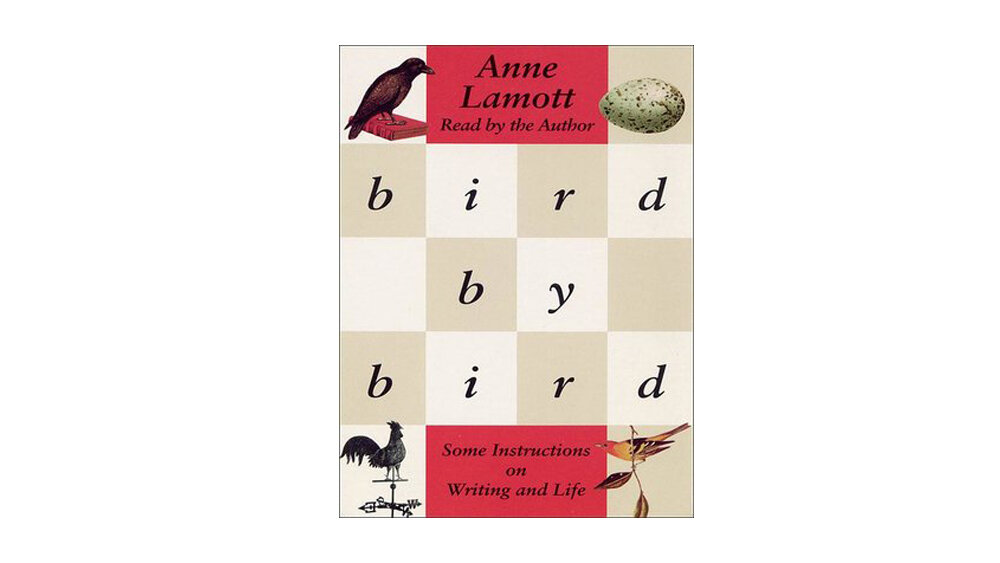
Writer Anne Lamott gives us instructions on writing and life in her book Bird by Bird. When she was little, her older brother was struggling to write a paper on birds the night before it was due. While he struggled, their father said to him, “Bird by bird buddy. Just take it bird by bird.”
Basically, the best time to start is now. Forget all the years you should have started writing, or how much longer it will take you to write. Get words in front of words and soon enough the stumble becomes a rhythm.
Lamott effectively emphasizes this notion again here: “E.L. Doctorow once said that 'Writing a novel is like driving a car at night. You can see only as far as your headlights, but you can make the whole trip that way.' You don't have to see where you're going, you don't have to see your destination or everything you will pass along the way. You just have to see two or three feet ahead of you. This is right up there with the best advice on writing, or life, I have ever heard.”
TLDR: Want to write? Start now, get it on the page. Don’t judge just drive. It will take you somewhere.
Tool 3) Book // The Art of Memoir by Mary Karr

The Art of Memoir was a huge help in clarifying what I was putting on the page. Figuring out how to scale back is so important for memoir writers because we have a lifetime of memories up for grabs. Plus, our ego is constantly saying, “Yes! That’s great, write about that! And that! And that too! Let’s keep it all in!” Which if we did write everything our book would be a million pages long with no audience. How do we know what stories are worth the reader’s time?
Too many ramblings can flood your message. Where did your theme go, and why are you telling this story? It might be a great anecdote at the dinner table, but it may have no place in Chapter 3. Revision is where the magic happens. For all my film nerds, we know there is no best director award without a killer editor.
Karr reminds me, memoirs are about themes less than chronological happenings. The people who are reading your story want to know about the emotive propelling of your life. Unless you’re a famous war hero, or well known public figure that’s already being documented in history books, a step by step recounting of your life is basically, boring.
Mary Karr threw away over 1200 pages of her last memoir. “I revise and revise and revise,” she writes, “Any editor of mine will tell you how crappy my early drafts are. Revisions are about clarifying and evoking feelings in the reader in the same way they were once evoked in me.”
TLDR: Re-read and revise often and get friendly with your delete key.
Tool 4) GTFO // Seriously, do something else writing related that isn’t about your memoir.

Find the time to get a gig or volunteering where writing is needed. Whether it’s in a similar vein to what you want to write or not, it doesn’t matter. Maybe it’s a part-time job writing - the deadlines will instill practice. Maybe you’re helping tutor kids in English - a second shot at your failed academic dreams (OK just me?). Maybe it’s one of those open mic poetry slam things - you need to get used to putting yourself out there if you want to write authentic work.
Maybe it’s not even writing related at all, and your brain needs a break. If you have an inkling that something is calling you outside of the bubble between your laptop and your eyes, answer it.
Tool 5) Social Media // Even if you hate it.

Social media isn’t going anywhere anytime soon, so you might as well start befriending it.
Get over how you feel about bloggers or social media. It’s a free and useful practice for writers. Blog, post to your Facebook/ Instagram / IG stories. Tik Tok your thing? Go nuts. Find a creative outlet on a social platform that has even the smallest audience. This is a test for how you handle putting yourself out there.
I am in constant doubt that what I write here on this blog or even in an Instagram caption will have any resonance. I worry about what I might look like to my friends and family. Then I remind myself I’m trying to write a memoir. Ha! This is kid shit. This is the test kitchen and the lab. Throw things, words, ideas, concepts, poems and art at the wall - see what sticks. What draws a reaction with your friends and family? What caused a comment, good or bad? Relish in the experiment, and leave your judgement at the door.
Tool 6) Read S’MORE // …And not just memoirs.

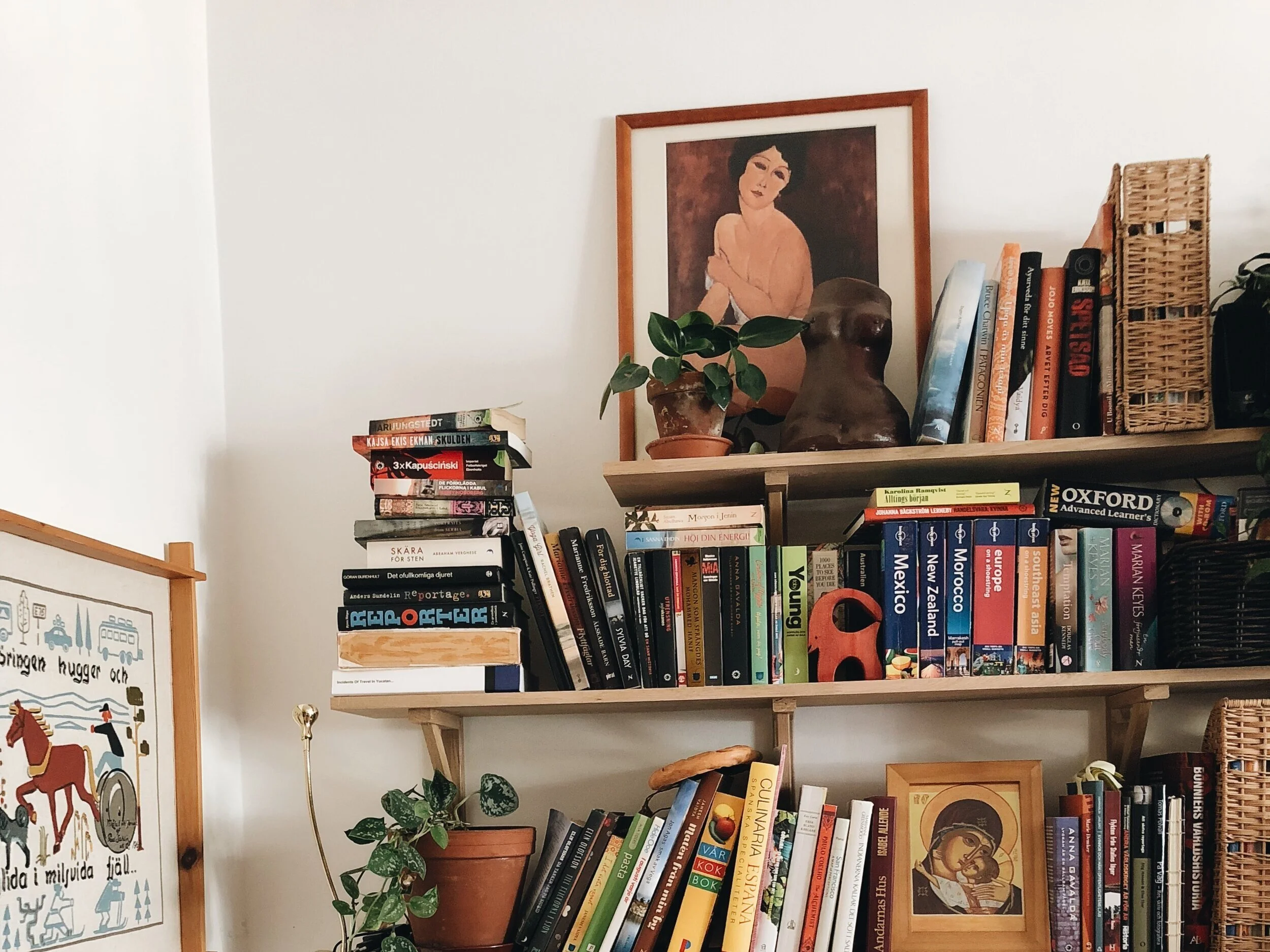
Best friend to a writer’s desk? A writer’s library. My friend Marie’s beautiful kitchen nook in Malmö.
After reading 5 bestselling memoirs in a row, I started to panic. How the hell was I going to match Karr’s brilliant voice? Was my chapter about adolescence starting to sound like David Eggers? Do I need more poetry a la Sherman Alexie? I have learned so much from reading from some of the greats, but take a pause after 1 or 2 in a row. Your voice needs room to grow too and I find that most of my ideas bloom after reading genres not related to memoir at all. I especially love diving into fantasy and historical fictions, where I can take notes on how to best enrapture an audience using drama and suspense.
Tool 7) Vision board your space // …within reason.

Little collages around my house help spark new thoughts.
Post little reminders around your house or apartment that help kick you in the butt. I have a little poster that says “What are you waiting for?” and I like to make collages for my screensaver to help give me a good boost. You may not want 100 post-its all around your house yelling at you to get to work, but the idea is to remind you once in awhile that you are a writer and you can fucking do this.
My “vision board space” includes having clean work space that I can cozily dive into when the mood strikes. For me this means a large desk free of clutter, a charged laptop, a vase of fresh flowers, family photos stuck around the wall, and a blank notepad.
In summary
The ideas on napkins can only take you so far. Like a fine artist starting a business, your creative ideas need concrete places to land. Beside me right now isn’t a glass of whiskey, but the tiniest and most powerful tool to get me writing at all, my daughter.

Hyperion! Why we gave an ancient word new meaning…
When we were kids, our lives were filled with group projects. Invent a country. Spend a day in the life of any career of your choice. Make your own newspaper. But we’re adults now, and we don’t get to play in this world. So here’s to playing with my favorite subject - words.

Hyperion everywhere.
Have you ever felt that rush…
The few seconds when a loud concert hall darkens, comes to a hush, and the audience roars as the band arrives on stage?
Waking up in a new city in another country and not knowing where your day will take you?
Hiking up the last crescent of the mountain, knowing your eyes are about to be rewarded?
Walking into your favorite restaurant on an empty stomach? Walking into a brand new restaurant you’ve always wanted to try?
During a first kiss? Or maybe during what you think might be your last?
Origin Story
It was 2017 and my dear friend Linda was coming to visit me in SoCal. It was her third time flying down to San Diego’s coast from Toronto, so we decided a weekend in LA would be the best jaunt this time around. There was a show at the LA Philharmonic that included free drinks on the garden rooftop. Any excuse to dress up and high brow around town! Plus there was a yurt in someone’s backyard via Airbnb that was calling our names. I wonder if any neighbors happened to peek over their fence only to see two girls putting on cocktail dresses outside on a deck raised above Silver Lake, sharing a locker sized mirror. I wonder if between big gulps of cheap white and discussing the possibility of alien life, we knew we were about to invent a word.

Hyperion Avenue
Linda and I met a handful of years ago, while working for Collective Arts Brewing. Her love for travel, conspiracy theories, music, and art always made for wild ivy-like conversations that branched from Canadian/ US politics one second, to our forever battle we endure when it comes to dying our hair “blonde.”
We were in the cab on the way to the Phil when one of my favorite conversations happened. It wasn’t our deepest by any stretch, but it would have a lasting effect on how we’d communicate thereafter. Maybe it was the mind-bending Gehry-designed building, the epic classical concert, or the roof views of one of our favorite cities, that punctuated the conversation, but this was a moment we wouldn’t forget:
“Do you ever get little jolts of excitement before certain moments that kind of take your breath away?”
“Yes! Wait, like the excitement before a really good meal, or before an epic trip across the country?”
“Exactly! Like, it’s not really the action coming up that matters, but the elation of anticipation just knocks you off your feet.... I feel like there isn’t a word for that.”
“Right. Excited is too overused. Elated seems …. inflated.”
“Yeah, there is no appropriate word. I can’t think of any.”
We were silent while the taxi turned onto Hyperion Avenue. We looked up.
“Hyperion?”
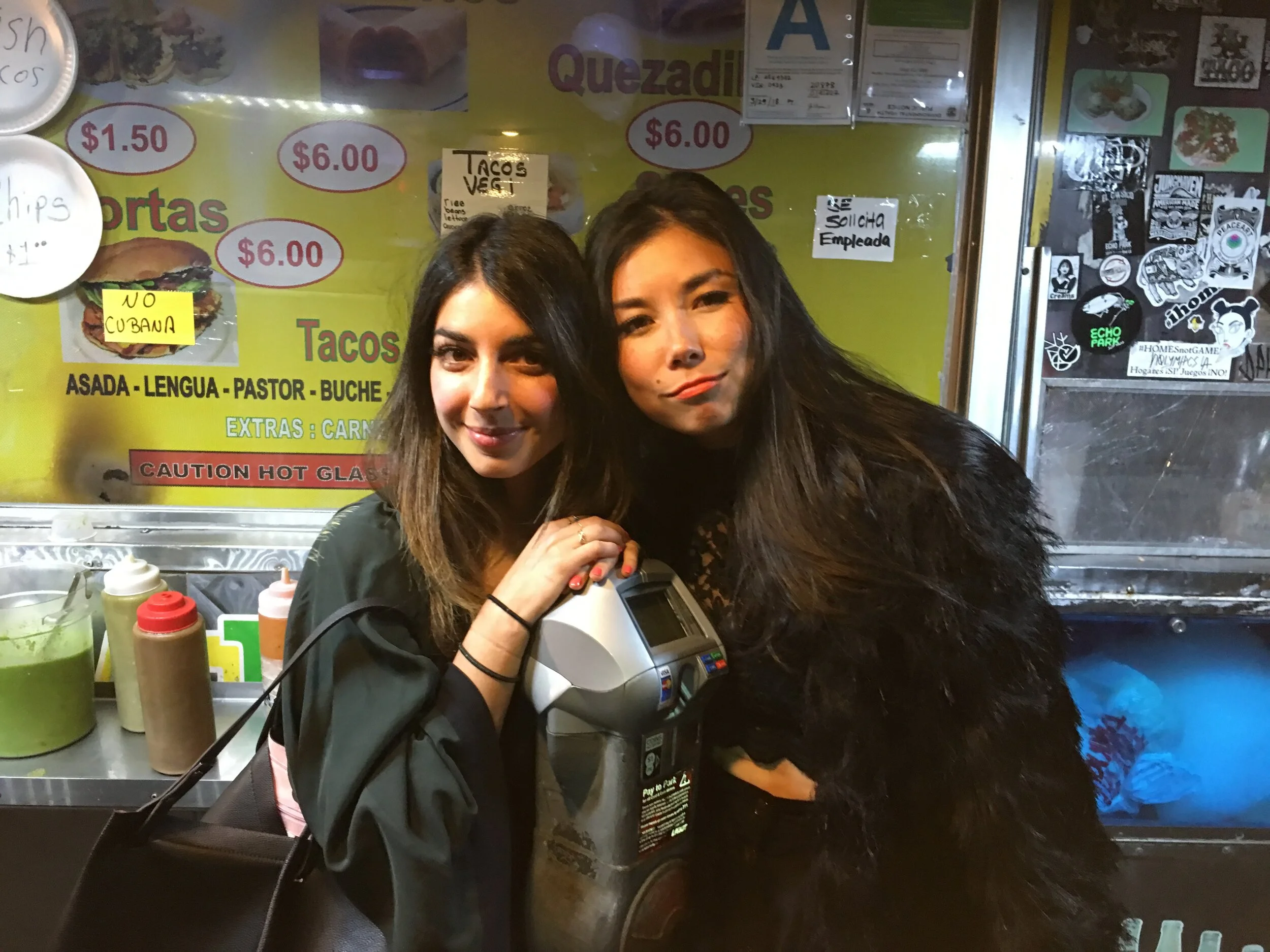
Later that same evening the hyperion continued with an epic taco truck meal.
But why?
Yes, this journal entry is about how we made up a word. Or rather, gave a very ancient word new meaning. Hyperion is already named in the dictionary. But imagine our meta-hyperion when we find out why it’s there in the first place. It’s both the tallest tree in the world and one of the 12 greek god children of Gaia.
Over the course of the next year, I would try to explain this new idea to a handful of friends and family. Sometimes just sliding in a little “Oooh, hyperion,” before taking the first sip of a delicious beer. Most laugh and more than a few lovingly joke that I’m ridiculous. After all, what’s the point of any of this? On more than one occasion I have heard friends use it (perhaps sarcastically) in conversation without my prompts. For a writer, that shit gets you going.
In a way, I’ve reverse-bucket-listed something I never thought I wanted to accomplish. Whether this goes anywhere or not, Linda and I know we came up with a word that we use often and we like to say among friends.

Send your imagination in hyper-drive > why can’t we invent words or give them new meaning?
Forget the why - Why not?
When we are children, our lives are filled with group projects. Invent a country! Spend a day in the life of any career of your choice! Make your own newspaper! These creative endeavors taught us organization and dedication, but most importantly these little projects teach us how to think outside the box. Put something on paper that hasn’t been put there before. We’re adults now and we don’t get to play in this world unless we assign ourselves these tasks.
So consider this our continuing-ed project. We invented a word and we damn well think we deserve an A on it. What’s your next group project going to be?
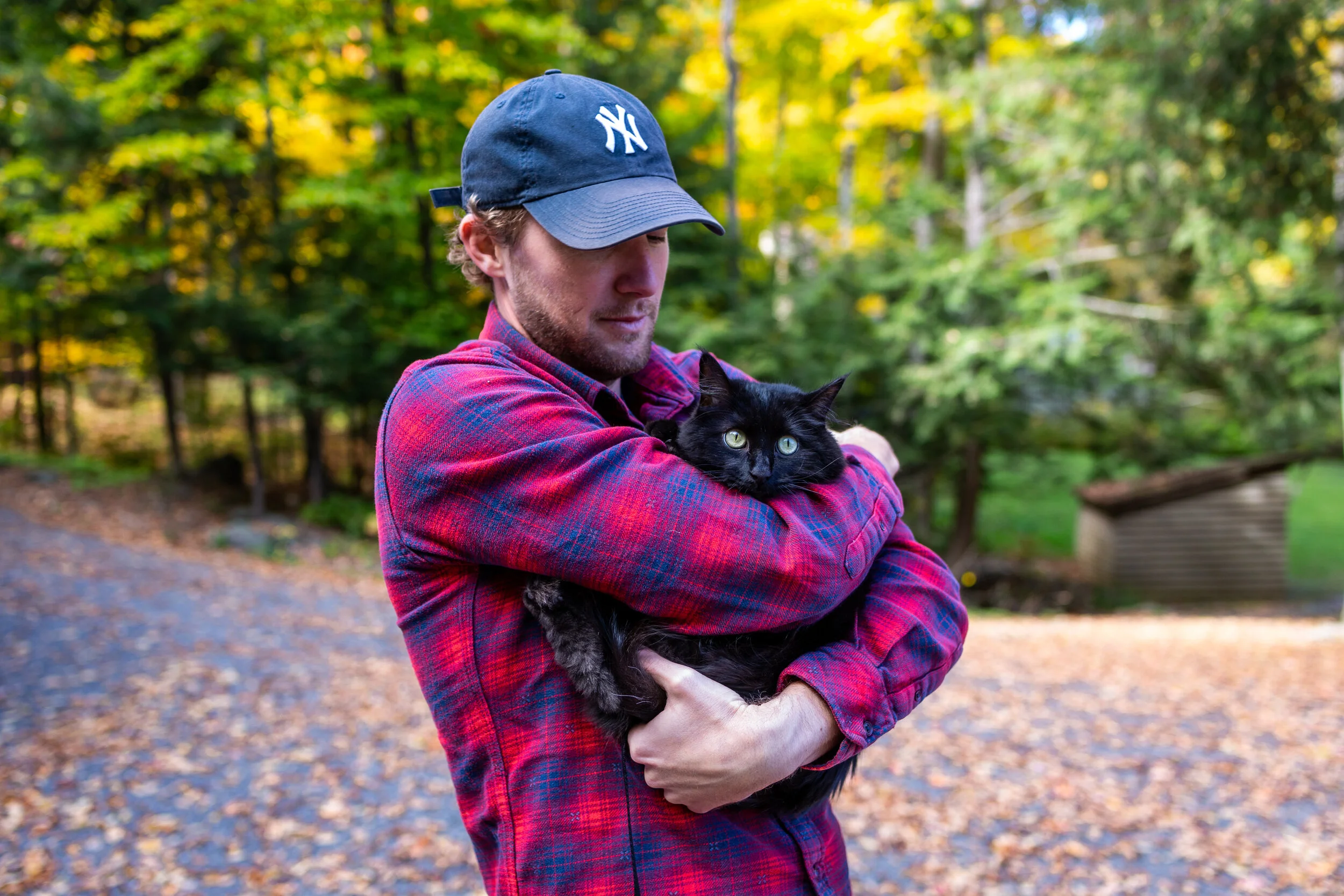
Hot dude hugging a kitty? HYPERION
Hyperion
hī-ˈpir-ē-ən
Verb and/or Interjection
An emotional state of extreme excitement which usually precedes an event that the subject is “looking forward to.”
I am trying this new Michelin star restaurant tonight and I am so hyperion right now.
I don’t want to come off too hyperion on the first date.
“First day in London!” “#hyperionforyou”
Synonyms:
Excited
Elated
Wow
Stellar
Antonyms:
Indifferent
Whatever
Dull
Blah

When you combine autumn with hiking, it’s the ultimate hyperion.
Other definitions:
Hyperion
A titan, father of Helios (sun)
Of Hyperion we are told that he was the first to understand, by diligent attention and observation, the movement of both the sun and the moon and the other stars, and the seasons as well, in that they are caused by these bodies, and to make these facts known to others; and that for this reason he was called the father of these bodies, since he had begotten, so to speak, the speculation about them and their nature.
— Diodorus Siculus (5.67.1)
Hyperion is a coast redwood (Sequoia sempervirens) in California that was measured at 115.85 m (380.1 ft), which ranks it as the world's tallest known living tree.[1]

Might as well end this with a moonset. Hear the loons? Hyperion, baby.